

Dierre’s approach to Minimum Environmental Criteria (Criteri Ambientali Minimi (CAM)): when sustainability becomes a method
At Dierre, we view environmental sustainability as a precise responsibility to the community and future generations. We have completed CAM mapping for fire doors Split and New Idra, and the CAM configuration process for interior doors New Alutech, New Liberty and Isy: a clear choice to make our environmental commitment measurable.
At Dierre, environmental sustainability is not an abstract concept or a trend to follow. It is a specific responsibility towards the community, people and future generations.
In a sector such as that of doors and windows, where every product has a long lifespan and a measurable environmental impact, this responsibility takes on special significance. It means asking ourselves: what materials do we use? Where do they come from? How long do our products last? How can we reduce emissions, waste and use of resources?
To answer all these questions, Dierre chose to embark on a journey that has led to the completion of CAM mapping for the Split and New Idra metal fire doors and CAM configuration for some of the group’s main interior door families: New Alutech 44/44A, New Liberty and Isy.
Not a formality to be marked as done, but rather a deliberate choice: to transform the company’s environmental commitment into a result that can be measured, verified and communicated, and a tangible value for retailers, designers and customers.
Why environmental sustainability is a key issue for Dierre
The construction market is undergoing far-reaching changes. Public authorities are increasingly requiring compliance with Minimum Environmental Criteria in public procurement. Designers are seeking documented, compliant solutions that can meet stricter requirements. Retailers need products that enable them to bid in complex tenders, including those in contexts related to the National Recovery and Resilience Plan.
But there is something deeper. Sustainability is not just a matter of regulations: it has become an essential condition to operate responsibly. Because a company that manufactures doors uses resources such as wood, metals and paints, and generates an environmental impact each step of the production cycle. Recognising this impact and working to reduce it is no longer an option: it is an integral part of our values.
Dierre believes that choosing not to limit itself to generic statements, but instead build a rigorous documentation system based on Minimum Environmental Criteria means giving concrete form to its vision of sustainability. It means transforming values and intentions into measurable, verifiable and usable data.
What are CAMs and why are they so important?
Defined by the Ministry of the Environment and Energy Security, the Minimum Environmental Criteria, are the criteria that the Public Administration is required to follow when purchasing goods and services, with the aim of reducing environmental impact and promoting sustainable production models.
An often misunderstood aspect: Minimum Environmental Criteria do not provide a product certification. This is the reason why no product can be labelled “CAM certified” or promoted as CAM compliant based on a simple certificate.
A construction product can be considered CAM compliant only when the manufacturer can demonstrate, with specific evidence and documentation, that it meets the environmental requirements laid down in the relevant legislation:
- use of recycled or recyclable materials
- traceability of production chains
- reduced environmental impact
- emission control
Compliance is formalised through CAM mapping supported by declarations, accredited certification and verifiable technical evidence. This documentation does not merely fulfil a regulatory obligation; it creates an invisible barrier between the declaration of intent and conclusive proof.
It makes all the difference in that it enables manufacturers to bid in public tenders, satisfy technical specifications and engage with designers who seek concrete guarantees. First and foremost, it is a transparent way of communicating a company’s environmental commitment.
For Dierre, choosing to adhere to Minimum Environmental Criteria means giving concrete form to its vision of sustainability, transforming values and intentions into measurable and documented data.
Dierre fire doors: compliance meets safety
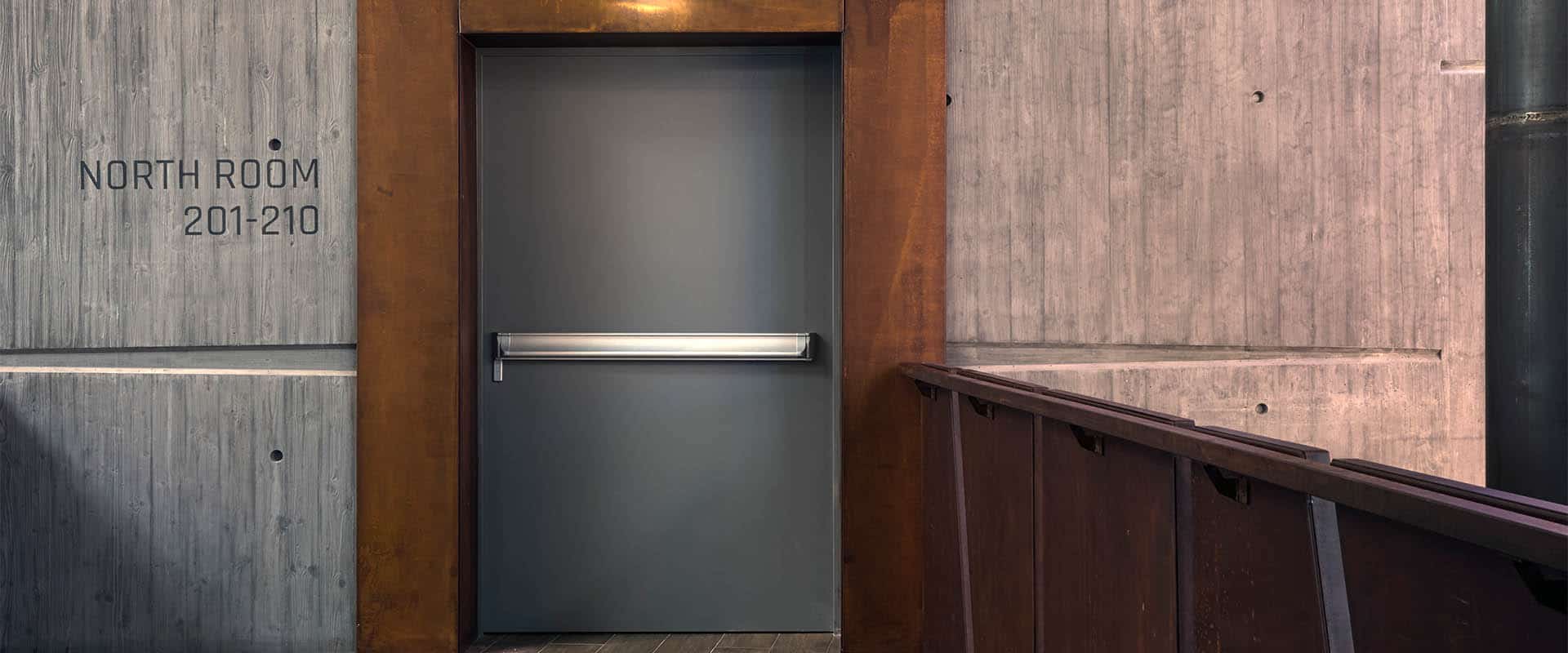
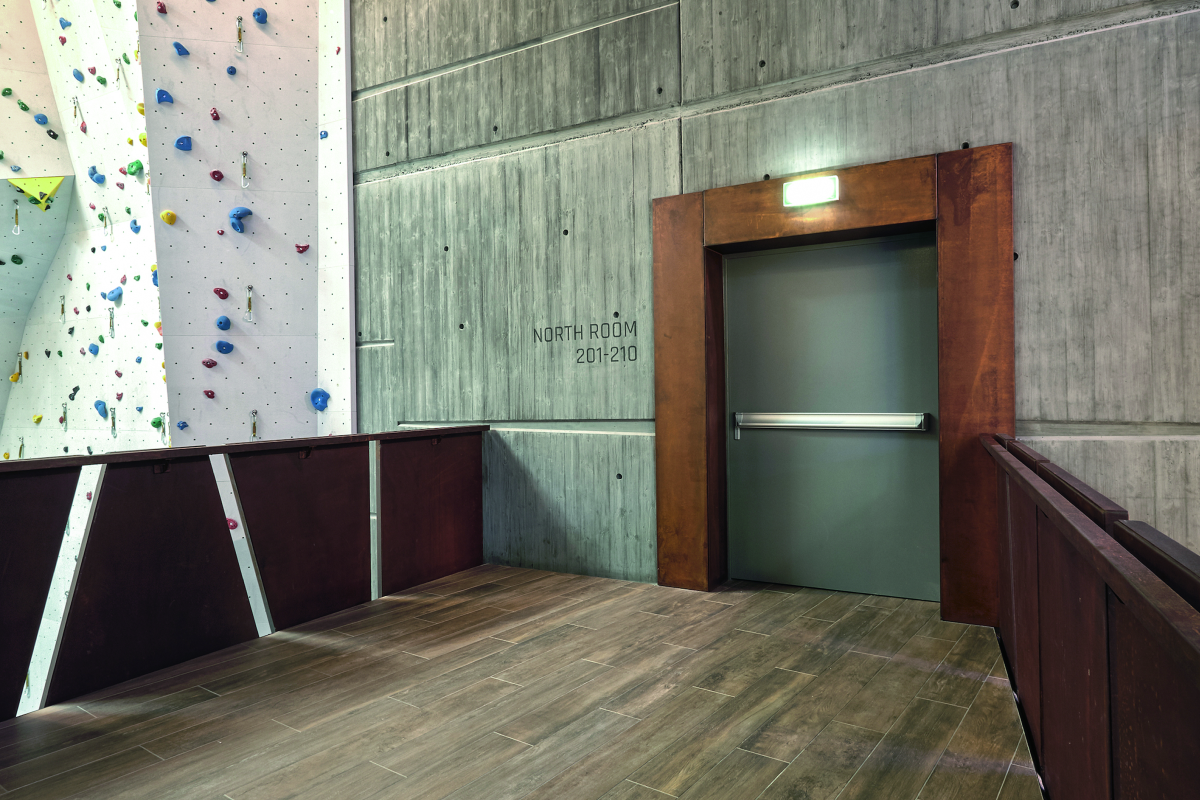
The first milestone was the completion of CAM mapping for our metal fire doors Split and New Idra. This was a complex process, requiring months of analysis, mapping and collection of technical evidence.
The choice to focus on these families was not random: fire doors are key elements in public and private building projects, where environmental compliance must go hand in hand with certified safety performance: two components of well-being, protection and sustainability, combined in a single door.
Having a complete CAM configuration means being able to meet these requirements with precision, providing retailers and designers with the documentation they need to include Dierre products in their projects without running into regulatory obstacles.
Configured interior doors: New Alutech, New Liberty and Isy
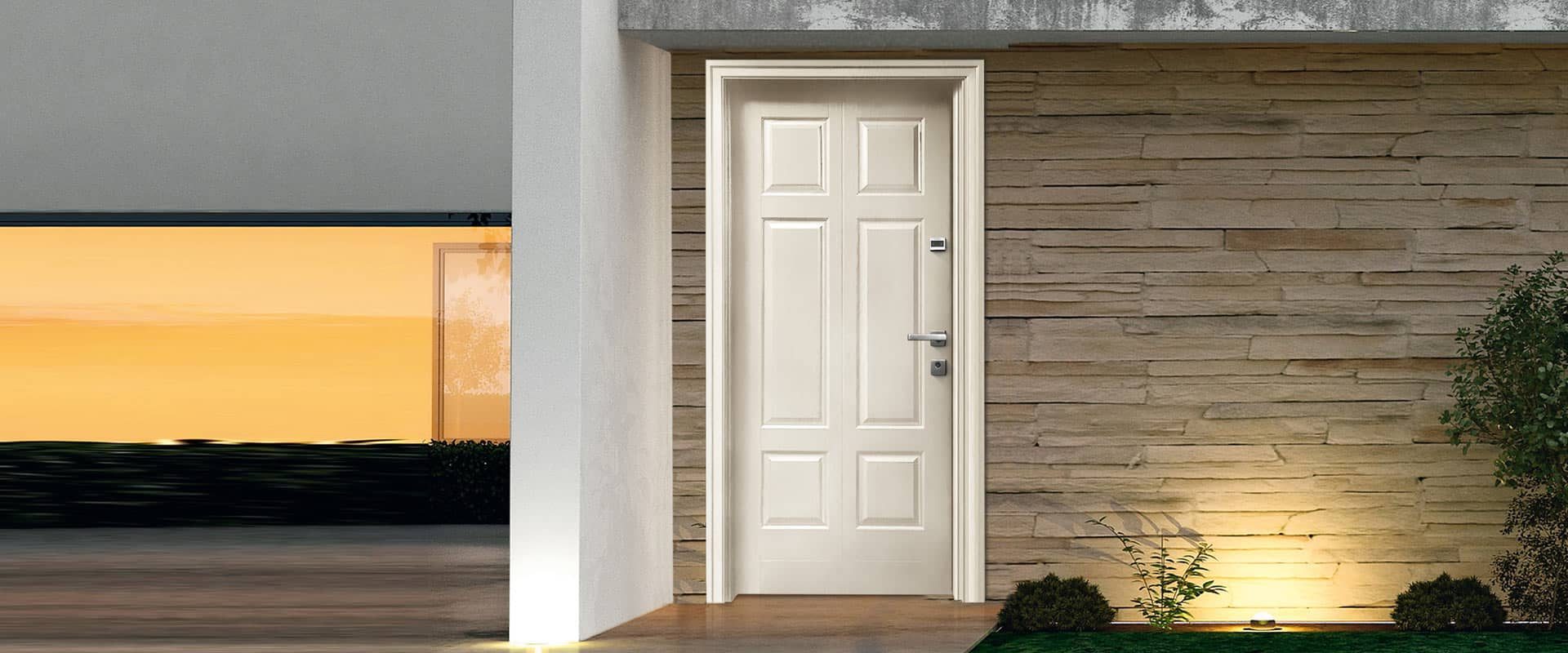
In parallel, Dierre completed the CAM configuration process for three families of interior doors:
- New Alutech 44 and 44A
- New Liberty (laminate and HPL)
- Isy
Compliance with Minimum Environmental Criteria for the Building Industry is increasingly required, not only in public contracts, but also in high-profile private projects, where environmental sustainability is an essential evaluation criterion. This value cannot be seen, but can be perceived in the choices of designers and purchasers.
Mapping these families means giving commercial partners an opportunity to offer compliant, documented solutions that are ready for the most demanding statutory frameworks. It means communicating that Dierre does not view sustainability as a mere accessory element, but rather as a pillar of its identity.
Why choose CAM mapping today
Having completed the CAM configuration process, now Dierre and Portedi are able to:
- Bid in public tenders, including as subcontractors, and even in tenders linked to the Italy’s National Recovery and Resilience Plan
- Accurately respond to technical requests by designers and architectural firms, providing verified documentation
- Offer doors with sustainability features that are verifiable, not just declared
For retailers, this means being able to access market segments that until now were difficult to reach. For designers, it means having a partner they can rely on, who can provide compliant solutions without complications.
CAM compliance is not just a document: it is a verifiable commitment that requires method, documentation and careful technical choices. It is a concrete way to transform environmental commitment into actual opportunities for those who choose Dierre.
Dierre sustainability: a value born of method
For Dierre, every CAM configuration signifies much more than a technical result: it is tangible evidence of how we work, of a corporate culture built on expertise, responsibility and long-term vision. Designing doors means protecting people, but it also means being aware of the impact that every choice has on the environment, on resources, on the future we are building together.
At Dierre, sustainability may never be seen as a goal that has been reached. It is a daily commitment, based on a rigorous method, careful process control and open dialogue with the market. An approach that transforms values into concrete, verifiable, authentic actions.
Share this article
Back