

Not all doors afford the same level of protection
Dierre doors are not like all the others: designed to last over time, they offer total security. With welded steel frames without joints, patented hinges adjustable on three axes, and monoblock shells that block heat, noise, and forced entry, every component works in synergy. For Dierre, security is not an addition, but a structural choice.
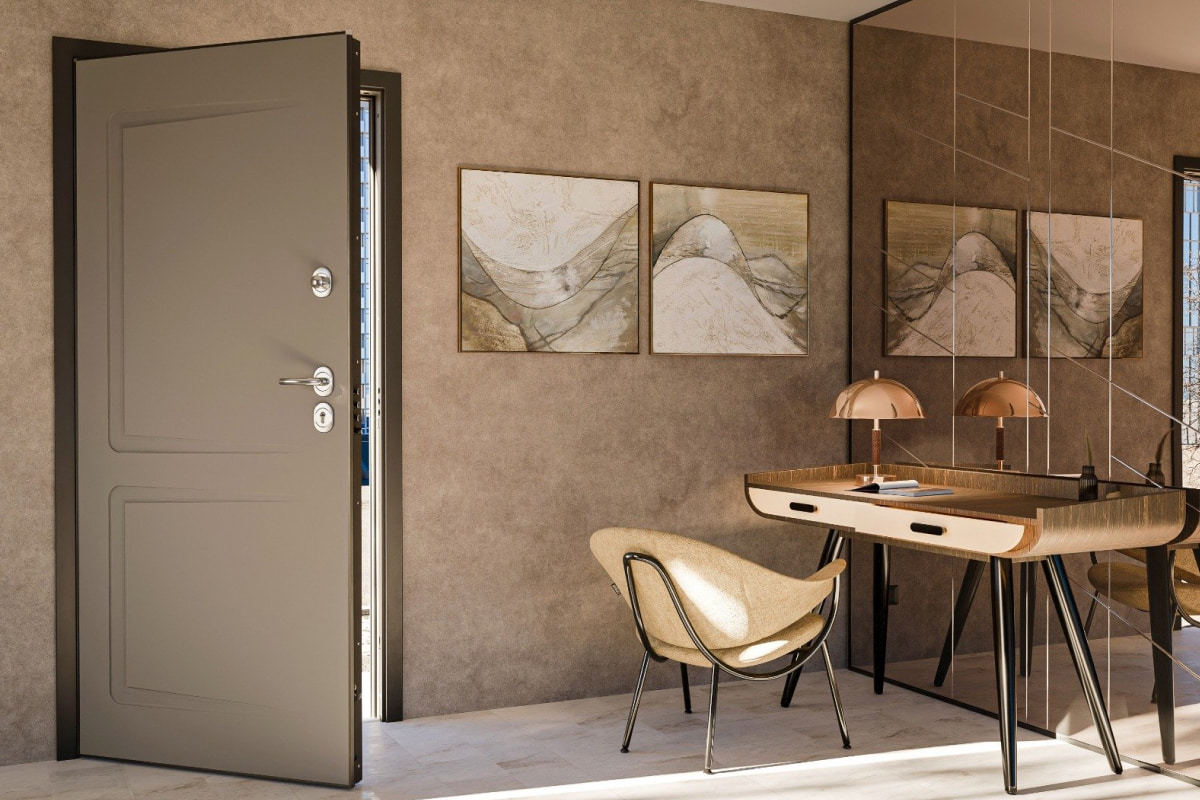
Choosing a security door is one of those decisions you tend to make only once. You look at the design, compare prices and read the technical data sheets. The problem is that most security doors on the market look alike: similar shapes, similar claims, prices that seem comparable. Yet, beneath the surface, the differences are huge.
The difference between just any security door and a Dierre becomes apparent under pressure, years after installation. It shows in a welded steel frame that does not cave in where others have joints, in patented hinges that adjust along three axes when traditional ones wear out, and in a one-piece structure that simultaneously stops heat, noise, fire and forced entry, rather than providing protection on one front only.
Dierre is not just an option among many. It is the benchmark against which all other choices are measured. Every component speaks of a strategic decision: building a door that makes no compromises on security, in any part of its structure.
Welded steel frame. No joints, no weak points
The first thing that a break-in attempt puts to the test is not the lock, but the frame.
Most manufacturers use frames that are assembled mechanically, using bolted or glued joints that loosen over time, lose their rigidity and yield under pressure exactly when they should provide maximum strength.
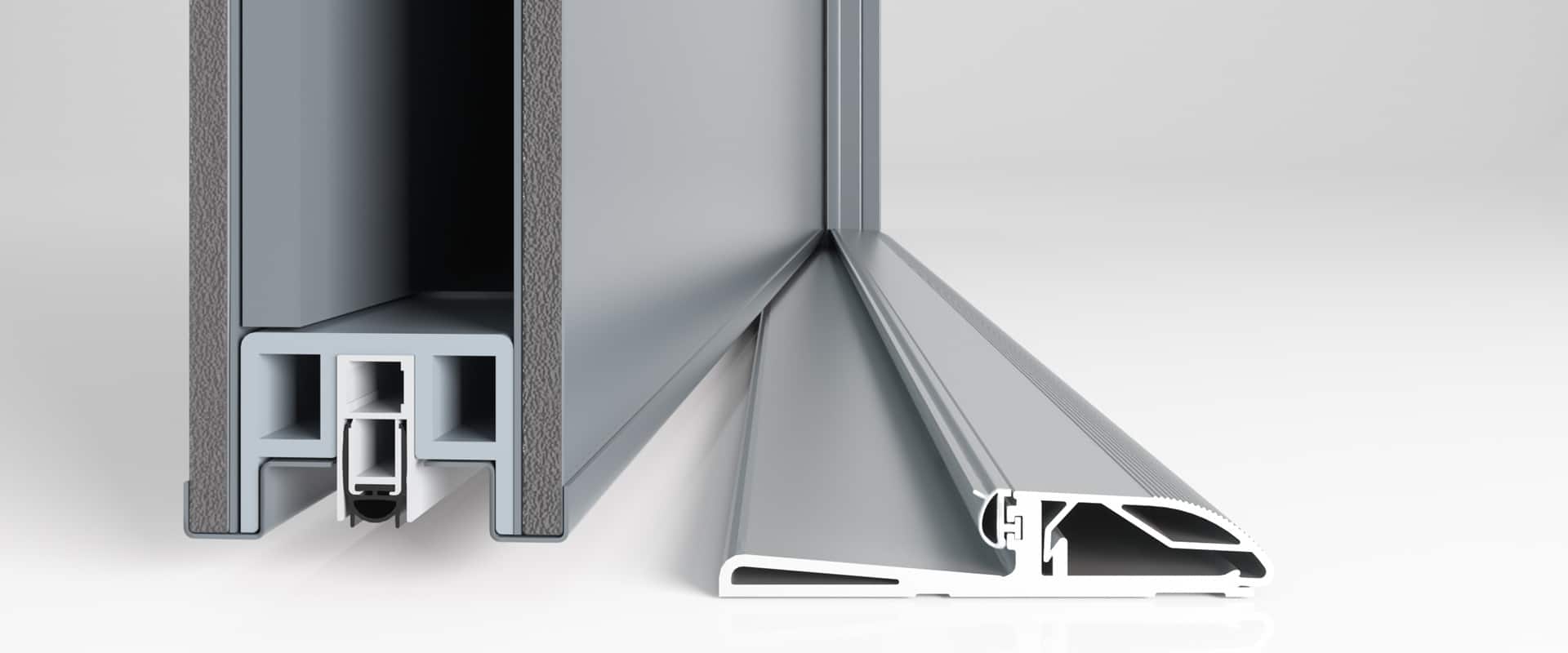
A Dierre frame is made of galvanised steel, ensuring protection against rust, and is welded as a monolithic block. No joints to give way, no points to be reinforced at a later date. The door’s one-piece frame is anchored to the masonry and supports all opening and closing parts, ensuring security and long-term functionality. The frame is finished with a built-in seal that cushions the door as it closes.
Micron hinges can be adjusted along three axes. For the entire lifespan of the door
In security doors, hinges are the element most subjected to strain. The hinges must bear the forces that are generated every time the door is opened or closed and with every seasonal change that causes the metal to expand or contract.
In traditional doors, the effects becomes apparent over the years: the door leaves start to drag, no longer close properly, and require costly repairs to be realigned.
The Micron Hinge by Dierre is a drawn steel component mounted on a support secured to the door slab, which can be adjusted along three axes. Any sagging or misalignment can be fixed with a simple adjustment without having to take down any part, even years after installation. An exclusive patent born of a precise observation: a door that truly lasts must be able to adapt rather than just withstand wear and tear.
A door designed to block heat, noise, fire and break-ins
A door that can resist break-ins but lets in drafts and noise only offers partial protection.
The body of a Dierre door consists of a double sheet of metal that becomes a single, solid structure and works simultaneously on all fronts: it prevents heat loss, thereby enhancing energy efficiency; dampens outside noise; slows flame propagation in a fire; and offers superior structural resistance to forced entry attempts.
A single structure, designed without compromise.
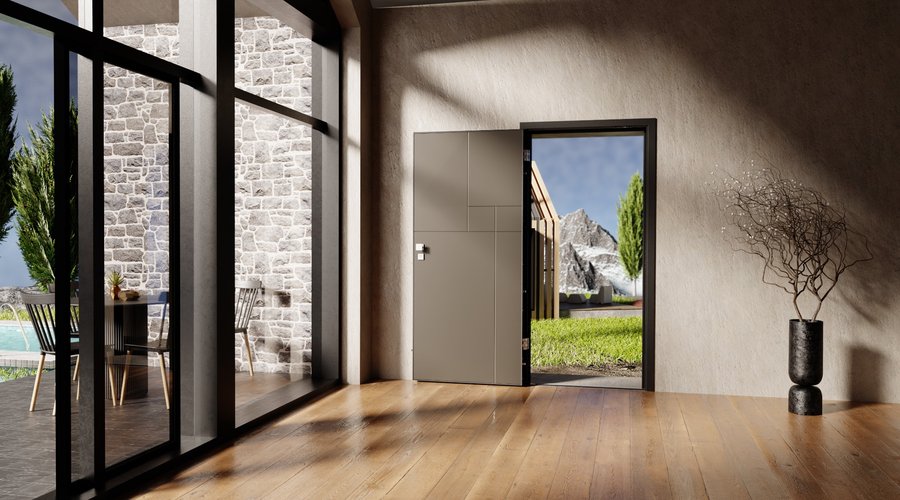
Break-in protection features that traditional doors lack
Protecting against break-ins is not just a matter of materials. It’s a matter of engineering.
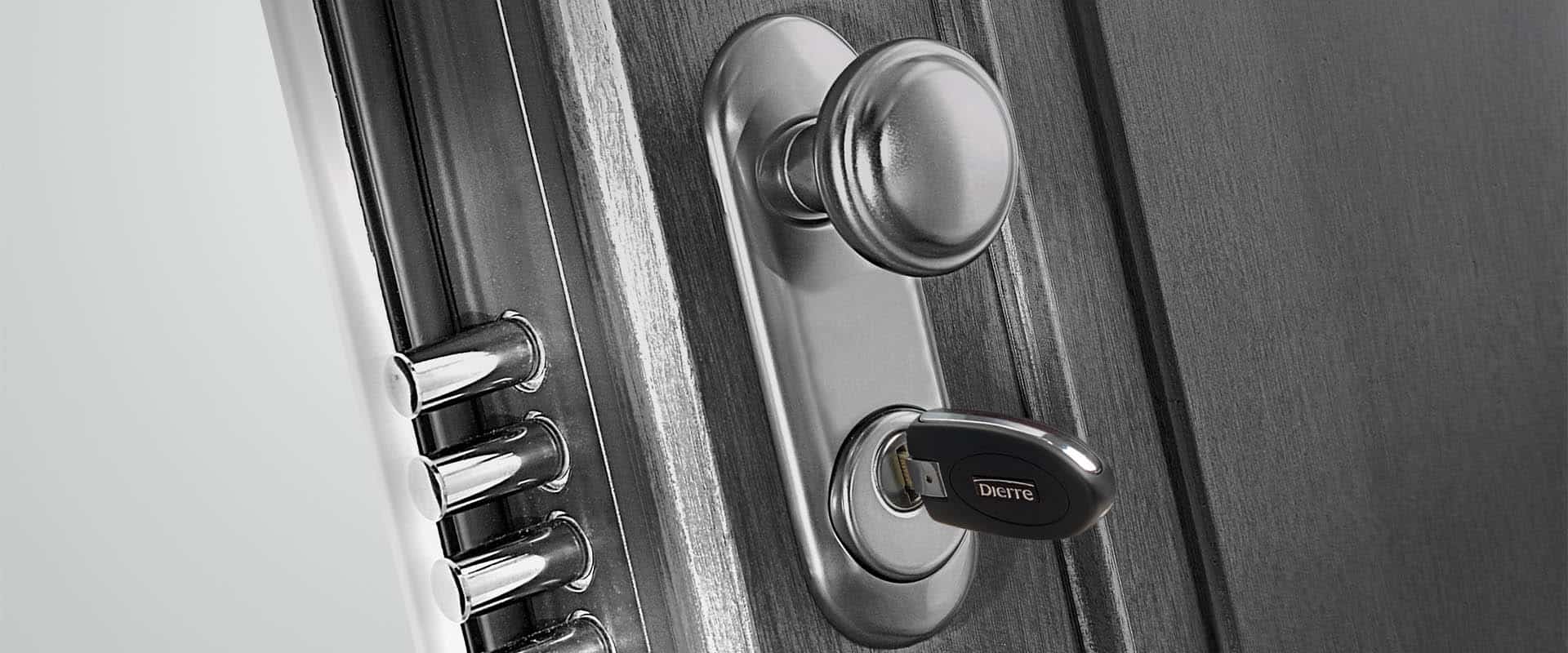
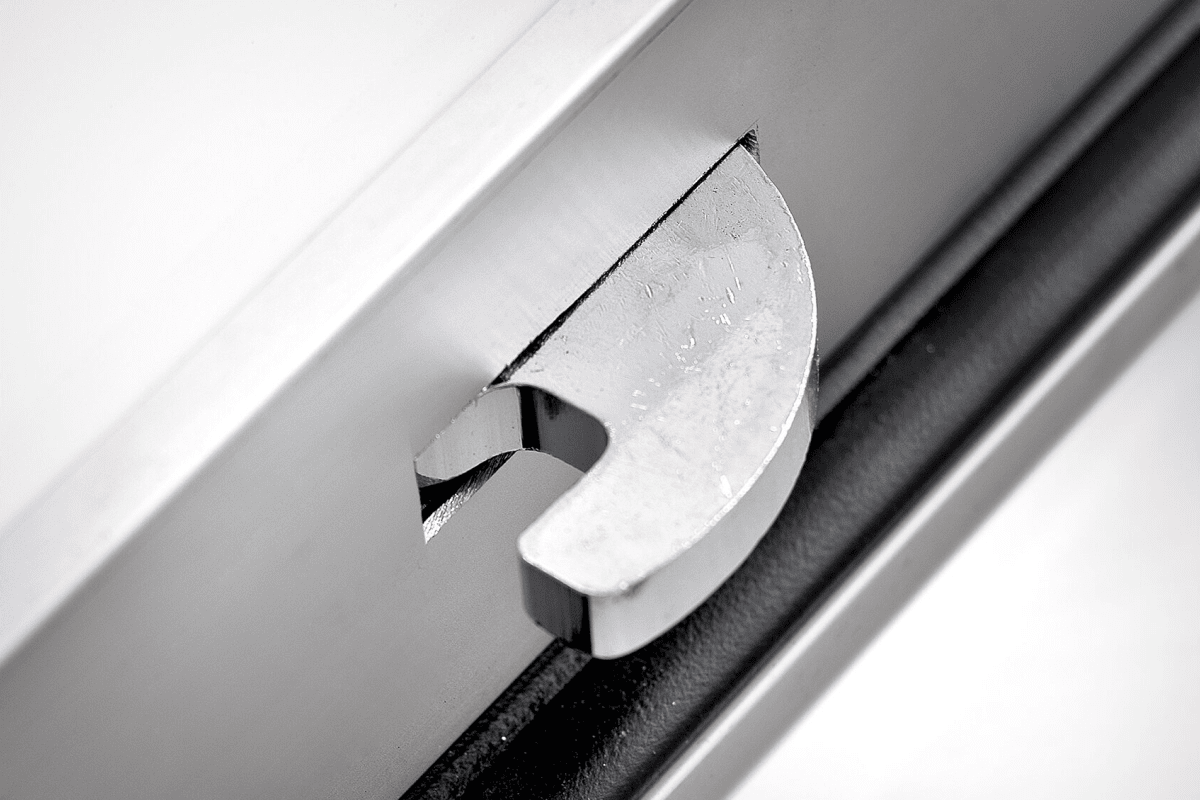
The Hook Deviator, made by cold forming and precision shearing, is fitted into the frame and, with a 90 degrees rotation, locks the door in place so that traditional forced entry methods cannot dislodge it. The Shild Bolts, made of white galvanised shaped steel, are positioned on the hinge side of the door leaf: when the door is closed, they fit into the corresponding recesses in the frame, thereby preventing the door from being unhinged.
Fast Grip® is a Dierre patent, and it shows
Traditional security doors use visible screws, caps and joints. These details suggest a product designed to be functional, not to look good.
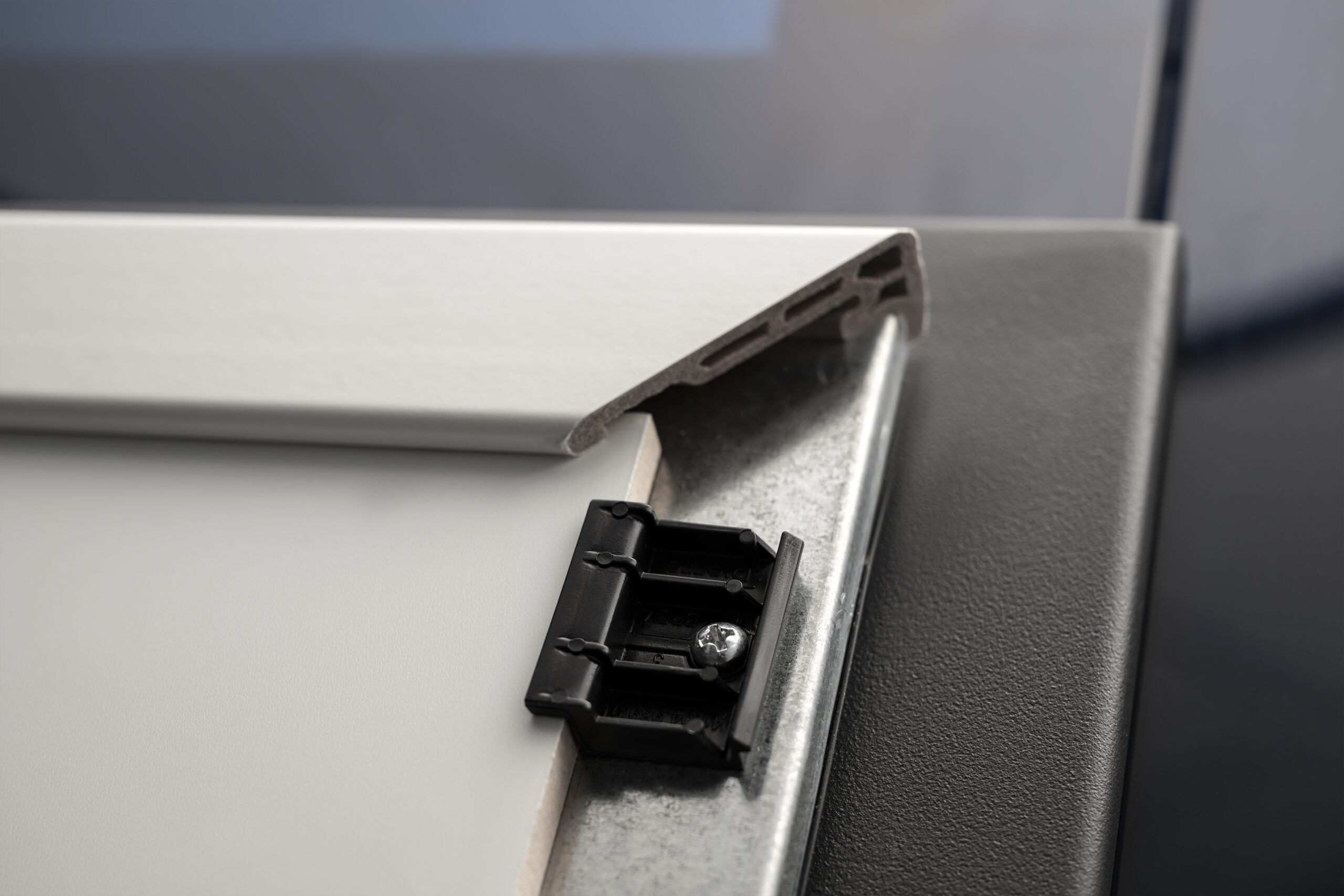
Dierre’s patented Fast Grip® system, developed according to the same construction principles as are used in the automotive industry, enables the internal frames securing the door panel to be fitted and removed in just a few simple steps, with no visible screws and no visual discontinuity. The frames engage with an internal tongue, rotate and snap into place. The coating material remains undamaged and the design stays clean.
Appearance and strength come from the same design.
Designed to last, down to every component
Frame, hinges, door leaf, break-in protection systems, fittings: in a Dierre door, no single element operates in isolation. Every component is designed to work in synergy with the others, to be a part of a system conceived as a whole from the outset. Not just parts simply assembled to seem adequate, but rather integrated engineering that stands the test of time.
True security cannot be added. It is built-in. And you can feel it, day in, day out, for years to come.
Share this article
Back