

Security Doors and Sustainability: The CAM Dierre Map
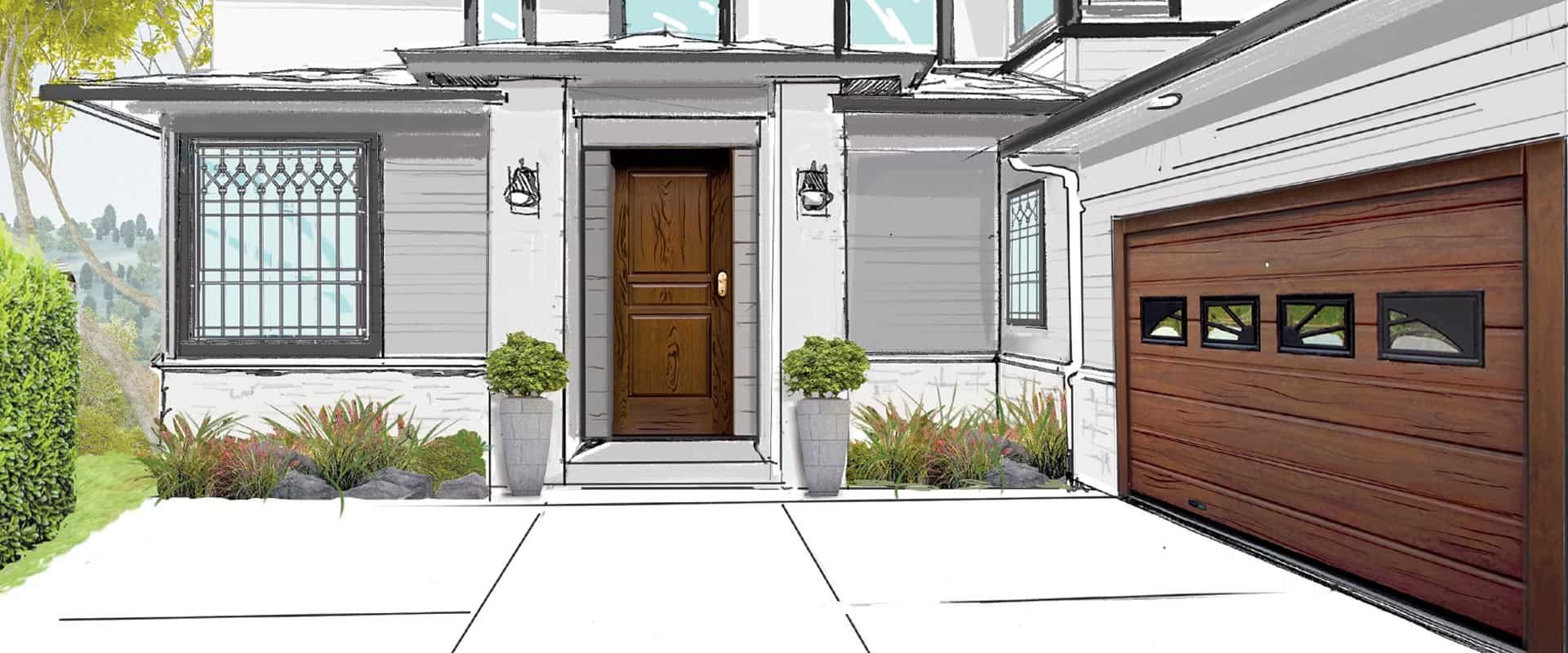
Following the CAM mapping of the Split and New Idra fire doors and the CAM configuration of the New Alutech, New Liberty and Isy internal doors, Dierre is extending its proven commitment to the most iconic range in its portfolio: the security door.
In this article you will find:
- what has changed compared to Dierre’s previous CAM programmes
- which environmental requirements have been verified for security doors
- which models in the range are covered by the mapping
- what this means in practice for retailers, designers and contractors
If you are not yet familiar with our approach to the Minimum Environmental Criteria (CAM) what they are, why they should not be confused with product certification, and why, for Dierre, sustainability is a method rather than a mere compliance requirement, we have explained this in detail in Dierre’s Approach to CAM: When Sustainability Becomes a Method. In this article, we focus on what is changing for security doors, the product that best embodies our identity.
From fire doors to security doors: a journey that broadens
Dierre’s first CAM milestone had covered just two product ranges: fire doors. The second had extended the method to three ranges of internal doors. With the new CAM mapping, the journey broadens further to encompass nine ranges of security doors, from traditional versions to the most advanced technological systems.
Sentry, Hibry, Sparta, Security Green Door and their respective Firecut versions, together with Tablet, Synergy-In and Synergy-In Firecut, Synergy-Out, D180, Sleek and Sleek Firecut, Sleek-Out, Silence: a significant proportion of the security door ranges is now covered by CAM mapping, a contribution that complements the work already carried out on other segments, such as fire-rated doors. This is a journey that continues, step by step, towards the comprehensive mapping of the entire product range.
A difference that goes beyond mere numbers. A security door is, by definition, a system: the frame, the door leaf, the insulation, the fittings and the paintwork all work together to ensure protection and performance. Mapping the CAMs for this range means verifying the sustainability of the various components of the system.
What has been verified for security doors
For the security door range, compliance has been documented in five areas:
- the origin and environmental impact of the steel, a structural component of the security door, via an Environmental Product Declaration (EPD) in accordance with UNI EN 15804 and UNI PdR 88 certification;
- the environmental safety of thermal and acoustic insulation materials, supported by safety data sheets, a REACH information sheet and ISO 17065 (EUCEB) certification;
- for certain aluminium components, the relevant Environmental Product Declaration;
- the environmental responsibility of the production facilities, certified in accordance with UNI EN ISO 14001;
- the safety of paints and varnishes, documented by the relevant safety data sheets.
These five assessments are applied consistently across the entire range, ensuring that the documentation supporting a project does not vary depending on the model chosen.

What this means for those who work with Dierre
As is already the case for fire doors and interior doors, the CAM certification for security doors enables Dierre to:
- take part in public tenders, including as a subcontractor, such as those linked to the PNRR;
- respond precisely to the technical requirements of designers and architectural practices;
- offer security doors with demonstrable CAM compliance.
For retailers, the range of security doors (which has always been the most sought-after product) is now accessible even under the most demanding environmental specifications. For designers, a single point of contact guarantees both structural safety and documented sustainability for the same product.
Share this article
Back